

If you’ve noticed small flies in your house, especially around your kitchen or bathroom, you’re probably asking yourself: How did all these flies get here without me noticing? While that is a valid question, a more important question might be: What kind of flies are these?
No matter which type of fly they are, you want them gone. However, it’s important to know what kind of fly you’re dealing with before taking any action. Otherwise, you’ll just be swatting flies ineffectively while the real problem keeps growing out of sight.
Why “Drain Fly” Isn’t Always Accurate
The term drain fly is often used broadly to describe any flies in drains, but this isn’t always the case.
Several species are commonly confused, including:
- Fruit flies
- Drain flies
- Phorid flies
Each of these has different habits, which means fly treatment depends entirely on what you’re actually dealing with.
Key Differences Between Drain Flies and Fruit Flies
- Appearance
- Drain flies (AKA moth flies): Dark, fuzzy, moth-like
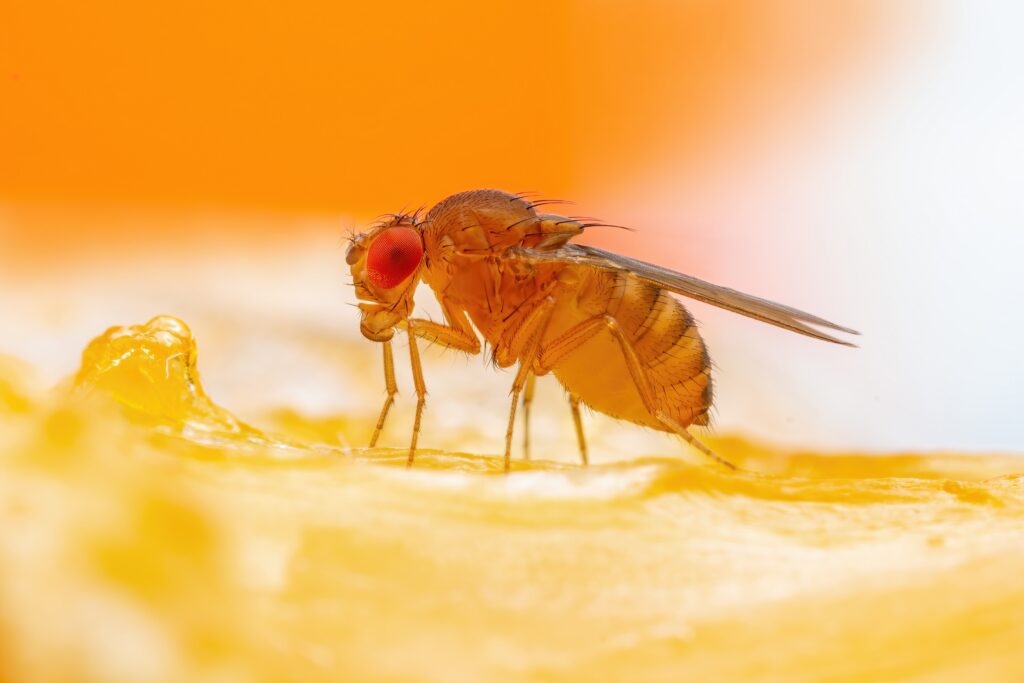
- Fruit flies: Small, smooth bodies, often with red or dark eyes
- Behavior
Understanding behavior can help you quickly identify flies in your home:
- Fruit flies: Hover and fly weakly
- Phorid flies: Run quickly across surfaces
- Drain flies: Sit still on walls, rarely fly
- Breeding Locations
If you want to know how to get rid of drain flies or fruit flies, this is what really matters:
- Fruit flies: Overripe fruit, food waste, typically located in kitchens
- Dark-eyed fruit flies: Rotting, moldy organic material in drains and garbage disposals
- Drain flies: Sludge inside pipes and sewer lines, usually found near sinks, showers, and floor drains
- Phorid flies: Found in sewage and structural issues, broken pipes, contaminated soil
- Fungus Gnats (bonus pest): Often confused with fruit flies, found in houseplants
Are Fruit Flies or Drain Flies Active at Night?
Many people assume drain flies are nocturnal, but that’s not entirely true.
- Fruit flies often prefer nighttime activity
- Phorid flies are active all day
- Drain flies are rarely seen flying
If you’re trying to locate the source of a fruit fly infestation, check drains at night with a flashlight.
Do DIY Traps Work?
Yes, but only partially.
A vinegar trap for fruit flies can:
- Reduce fly populations
- Help identify the species
But traps alone won’t eliminate the infestation. The only real solution is removing the breeding source.
How to Get Rid of Drain Flies and Fruit Flies
- Identify the Source
Look for:
- Rotting food
- Drain buildup
- Garbage disposals
- Floor drains
- Clean Drains and Surfaces
Consistent cleaning is key to preventing flies in the house.
- Use Enzyme Cleaners
These break down organic matter inside pipes, which is critical for drain fly treatment.
- Check for Plumbing Issues
Persistent infestations may indicate:
- Sewer line damage
- Hidden leaks
- Structural problems
Get Rid of Your Flies with Peachtree Pest Control
Dealing with small flies in your house isn’t just annoying; it can signal a deeper issue. Whether it’s a simple fruit fly infestation or a more serious drain fly problem, the solution always comes down to one thing: Find and eliminate the breeding source. We at Peachtree Pest Control have been in business for 50 years for a reason: we know this stuff! Call us to schedule your fly inspection today, or use our free online estimate form.