

Humane Bat Removal and Exclusion Services
Finding bats in your attic, walls, chimney, or other areas of your home can be unsettling and should be handled carefully. Peachtree Pest Control’s wildlife control services includes expert bat removal and exclusion services designed to safely remove bats and prevent them from returning.
Our wildlife control technicians inspect the property to identify active roosting areas and entry points, use humane exclusion methods to allow bats to leave the structure, and help seal vulnerable areas against future activity. We provide bat control services throughout Atlanta, Augusta, Marietta, Woodstock, Suwanee, and surrounding communities.
Signs You May Have Bats in Your Home or Business
Bats often stay hidden in attics, wall voids, rooflines, and other sheltered areas, so you may notice signs of activity before you actually see a bat inside your home or business. Some of the most common signs of a bat problem include:
- Bats entering or leaving around dusk. Seeing bats repeatedly flying from the same roofline, soffit, vent, chimney, or siding gap can indicate an active roost.
- Scratching or squeaking sounds. Bats may create light scratching, fluttering, or squeaking noises in attics, walls, or ceilings, particularly around dusk and dawn.
- Bat droppings around the property. Guano may collect below entry points, inside attics, or near areas where bats are roosting.
- Dark staining near openings. Repeated bat activity can leave dark or greasy-looking marks around small gaps or openings used to enter a structure.
- Unusual odors. Larger or long-established bat colonies may produce noticeable odors from accumulated droppings and urine.
- Bats appearing inside living or working areas. A bat inside the occupied portion of a building may indicate that bats are entering through an attic, chimney, wall void, or another opening.
If you are seeing one or more of these signs, avoid attempting to remove or seal bats inside the structure yourself. Peachtree Pest Control provides professional wildlife removal and exclusion services to inspect the property, identify how bats are getting inside, and determine the appropriate bat exclusion approach.
For homes with signs of activity around the attic or roofline, our team can also evaluate areas where wildlife may be entering and recommend exclusion measures to help prevent future problems.
Our Bat Removal & Exclusion Process
Removing bats from a home or business is different from treating common household pests. Because bats may be protected and can have seasonal maternity periods, successful bat control requires careful timing and the proper exclusion methods and is always best handled by professionals.
1. We’ll Inspect Your Property
Our wildlife control team inspects the property to look for signs of bat activity, identify likely roosting areas, and locate openings bats may be using to enter and exit the structure.
2. Develop an Exclusion Plan
Once we understand where the bats are entering, we determine the appropriate exclusion approach. Bat exclusion is designed to allow bats to leave the structure without trapping them inside or allowing them to return.
3. Install One-Way Exclusion Devices
When appropriate, one-way exclusion devices are installed at active entry points. These allow bats to exit normally but prevent them from re-entering the building. Georgia wildlife guidance recommends using exclusion rather than lethal removal for bats.
4. Seal Potential Entry Points
After the bats have left and the exclusion period is complete, accessible gaps and openings that could allow future entry should be sealed or repaired. This may include areas around vents, soffits, fascia, rooflines, siding, or other small openings. Georgia DNR specifically recommends completing exclusion along with repairs that prevent bats from reoccupying the structure.
5. Help Prevent Future Bat Activity
Our team can identify additional conditions that may make the property vulnerable to bats and recommend steps to help reduce the likelihood of them returning.
A note about bat maternity season in Georgia
Bat exclusion requires special care during maternity season, when young bats may not yet be able to fly. Georgia DNR recommends avoiding routine bat exclusions from April 1 through July 31 unless the work is performed by a licensed Nuisance Wildlife Control Operator under the appropriate circumstances.
How Do Bats Get Into Homes & Businesses?
Bats naturally live in caves and hollow trees. Wildlife control experts explain in many areas in Atlanta, Augusta, Fayetteville, Woodstock, Suwanee, Marietta, Hiram, and Aiken SC, human development has made bat habitats scarce, and so these highly adaptable creatures often make their homes in unoccupied structures, including sheds, garages, and the rafters of homes or business buildings. Maternal colonies raising their young favor attics for their warmer temperatures. Bats can enter surprisingly small areas, and their entry points can be anything from an unscreened attic vent to a crack in the siding or a hole under the eaves. If a colony of bats finds a way into your home or business for raising young, they’ll usually return every year.
Wildlife control experts state the only way to effectively prevent bats from entering your home or business is to properly seal entrances. Seasonal maintenance can help you identify and eliminate entry points. Another way to learn how to keep bats away is through the recommendations of humane bat control from the wildlife control experts at Peachtree Pest.
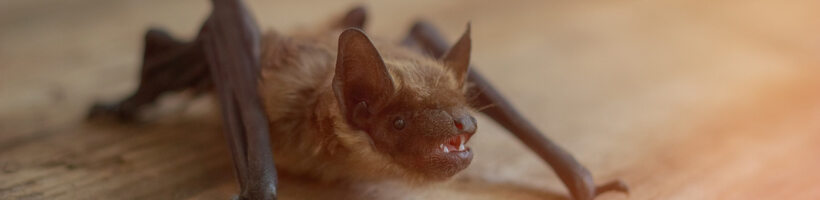
What Are the Effects of Bats in and Around My Home or Business?
Bats nesting in your Atlanta, Augusta, Fayetteville, Woodstock, Suwanee, Marietta, Hiram, and Aiken SC home or business can be a nuisance. For one thing, bat droppings (also known as guano) and nests can cause allergies, unsightly marks, and unpleasant odors. However, the most serious problem with a bat infestation is that bats can be carriers of disease. Bat guano can contain airborne fungus spores that can cause histoplasmosis. While this is rare, it can become severe, causing influenza-like symptoms, pneumonia, and even death. Bats can also carry mites, fleas, and ticks.
Wildlife control experts warn although bats rarely bite humans they can, like most wild animals, be carriers of rabies. Bat bites are often small and can even go unnoticed. Therefore, if you find signs of a bat in an area with children, sleeping individuals, or people suffering from dementia or another issue that could render them disabled, the CDC recommends that they be tested for rabies as soon as possible.
How Long Do Bats Live?
Depending on the species, the life expectancy of bats can be 20 to 40 years in the wild. Wildlife control experts explain this means that if bats start nesting in a certain area, you can expect them to return to that same place every year for decades unless something deters or bars them from returning.
How Do I Prevent Bats?
The best way to prevent bats from entering your home or place of business is to conduct regular inspections of the building to ensure there are no entry points. The wildlife control experts at Peachtree Pest recommend checking in these spaces:
- Spaces between the walls and holes created for utility lines and airflow
- Under the eaves
- Chimney flues
- Holes and cracks in damaged siding, fascia, or soffits
Because most bat species are protected in Atlanta, Augusta, Fayetteville, Woodstock, Suwanee, Marietta, Hiram, and Aiken SC and in need of careful conservation, bat pest control issues must be handled with the utmost care. Peachtree Pest handles pest bats with humane techniques that have been proven effective. Using expert pest control knowledge of bat habits and behaviors, Peachtree is able to install strategic prevention measures to keep bats away. If bats are already in your home or business, an exclusion process is the best way to eradicate the infestation. Our highly experienced wildlife control technicians install one-way doors that allow bats to leave for feeding but bar them from re-entering the structure. This method is highly effective and usually eliminates the pest bat population within a number of days. Bat exclusion provided by the wildlife control experts at Peachtree Pest can be performed April 1st – April 30th, and August 1st – October 15th.

Bat Exclusion During Maternity Season
- Our wildlife control experts can block openings between the bats’ roost and human living areas (i.e. the space beneath the attic door, holes in ceilings or walls, etc.) at any time of year since doing so will not disturb or trap bats. This is a preventative measure to keep bats from coming into contact with people or pets inside the home.
- For health-related concerns, residents should contact their local health department.
Common Bats Found in Georgia
Georgia is home to several species of bats, and some may use homes and commercial buildings as temporary or seasonal roosting sites. Bats are often drawn to protected spaces such as attics, rooflines, wall voids, chimneys, and other areas that provide shelter from weather and predators.
Species commonly found in Georgia include big brown bats, evening bats, eastern red bats, little brown bats, and tri-colored bats. While identifying the exact species can sometimes be helpful, the more important concern for property owners is determining where bats are entering, whether they are roosting inside the structure, and how they can be removed without trapping them inside.
If you suspect bats are living in your attic, roofline, chimney, or another part of the building, Peachtree Pest Control can inspect the property and determine the appropriate wildlife removal and exclusion solution. Our goal is to address the current bat activity while also identifying and securing entry points that could allow bats or other wildlife to return.
For homes where wildlife activity has contaminated attic insulation with droppings or urine, Peachtree also offers insulation removal and replacement services when appropriate.
GET A FAST & FREE ESTIMATE








Frequently Asked Questions About Bat Removal & Exclusion
Peachtree Pest Control’s professional bat removal usually relies on exclusion rather than trapping or killing the bats. One-way exclusion devices are installed at active entry points so bats can leave the attic but cannot return. After the bats have exited, the openings can be sealed to help prevent future activity. In Georgia, bat exclusion also has to account for maternity season, when flightless young may be present.
Georgia DNR recommends avoiding routine bat exclusions from April 1 through July 31 because young bats may not yet be able to fly and could become trapped inside the structure. When exclusion is necessary during maternity season, Georgia requires specific handling by a licensed Nuisance Wildlife Control Operator.
They can if the openings they used to enter the building are left accessible. Effective bat control should include both exclusion and sealing or repairing potential entry points after the bats have left. Because bats may return to familiar roosting sites, preventing re-entry is an important part of the removal process.
Bats can enter through surprisingly small gaps around rooflines, soffits, fascia, vents, siding, chimneys, and other openings. Attics and other protected areas can provide attractive roosting locations, particularly for maternity colonies. An inspection can help identify active entry points as well as other areas that may need to be sealed.
No. Sealing an active entry point before the bats have left can trap bats inside the structure, including young bats that may not yet be able to fly. Proper exclusion allows the bats to exit first. After the structure is confirmed clear, the entry points can then be permanently sealed. Georgia DNR recommends leaving one-way exclusion devices in place long enough to account for bats that may not leave the roost every night.
Avoid handling the bat with bare hands and keep people and pets away from it. If there is any possibility that a person or pet had direct contact with the bat, especially if someone was sleeping or unable to reliably determine whether contact occurred, contact the appropriate health or animal-control authority for guidance. For recurring bat activity or bats entering from an attic or wall space, a professional wildlife inspection can help identify where they are getting inside.
A single bat that accidentally enters a living space may be different from a colony roosting in an attic or structure. If multiple bats are present, bats are repeatedly entering the building, or you suspect a maternity colony, professional exclusion is usually the safer option. The process requires locating active entry points, allowing bats to leave without trapping them inside, and sealing the structure afterward. Georgia DNR specifically recommends professional assistance for difficult exclusions and exclusions that must occur during maternity season.
Protecting Your Home or Business From Bats With Peachtree Pest Control
Peachtree Pest Control offers expert treatment designed to effectively and efficiently control and prevent pests from invading your home or business in Atlanta, Augusta, Fayetteville, Woodstock, Suwanee, Marietta, Hiram, and Aiken SC. Our use of Integrated Pest Management (IPM) techniques focuses on finding the core of the pest concern and controlling Bats from the source. Through IPM, pest control materials are selected and applied in a manner that minimizes risks to human health, pets, and the environment.
Call Peachtree Pest Control today for your FREE and NO OBLIGATION estimate at 855-732-2487 or Schedule Online today!