

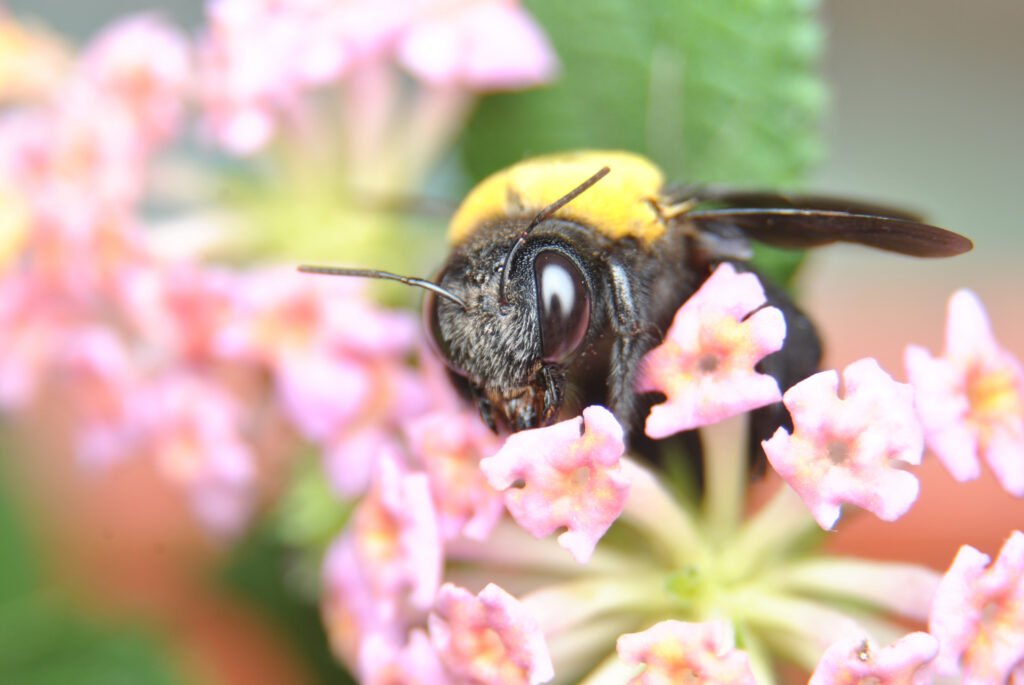
Carpenter bees are a familiar sight for homeowners across Georgia and the Carolinas. The region’s mild climate, common building materials, and popular home designs create the perfect environment for carpenter bee activity to thrive. While these insects may seem like just another seasonal nuisance, their presence can lead to devastating, expensive damage if left untreated.
If you live within Peachtree Pest Control’s service area, understanding the reasons why carpenter bees are so active as well as learning what to look out for can protect your home before a small issue becomes a series of costly repairs.
Why Carpenter Bees Thrive in Georgia and the Southeast
Several regional factors are at play when it comes to how attractive Georgia is to carpenter bees:
Mild Winters
Unlike colder climates in the north, Georgia’s milder winters allow carpenter bees to overwinter inside wooden structures. Instead of dying off from the chilled weather, they remain sheltered and emerge later in the year, which can sometimes be as early as late February.
This extended season of carpenter bee activity increases the likelihood of reinfestation, especially when they return to previously unused and untreated tunnels. Over time, repeated burrowing in the same areas leads to more extensive damage.
Common Building Materials
Homes throughout Georgia and the Carolinas often feature softer woods such as cedar, pine, and cypress. Carpenter bees prefer softwoods as opposed to hardwoods when it comes to nesting.
Even painted or treated wood can end up vulnerable to attack, particularly if it is beginning to weather or crack. These high-risk materials are often found in your home’s exterior features including:
- Decks
- Porches
- Pergolas
- Soffits
- Fascia boards
- Wide eaves
These areas provide easy access and ideal conditions for carpenter bees to bore into wood and create nesting galleries to nurse and raise their young.
Southern Architecture
As if it wasn’t enough that the type of wood Georgia and Carolina home are made out of are at risk, the actual structure of southern homes is another factor that leads to increased carpenter bee activity. Southern architecture often includes exposed wood elements and shaded overhangs. These features not only offer carpenter bees protection from the elements but also make it easier for them to establish and expand their tunnels over time.
There are a few signs that homeowners notice first, typically in these areas:
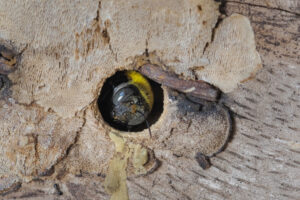
- Perfectly round entry holes in wood
- Small piles of sawdust (frass) underneath the holes
- Bees hovering near eaves, railing, or trims.
If you are seeing bees and you aren’t sure which type of bee it is, the circular holes are a very clear indication that you are dealing with a carpenter bee infestation.
Carpenter Bees vs. Bumble Bees
Speaking of bee types, carpenter bees are frequently mistaken for bumble bees, especially in the spring when both species are active. While they may appear similar on first glance, there are important visual differences:
- Carpenter bees have shiny, hairless abdomens
- Bumble bees have fuzzy, yellow-and-black striped bodies
If it is too hard to spot the bees since they are flying so fast, they also have extremely different behaviors:
- Carpenter bees bore into wood to create nests
- Bumble bees nest in the ground
Mistaking the two leads to not only confusion, but also delayed action when damage is already taking place.
The Risks of Unknowingly Allowing Recurring Carpenter Bee Damage
While carpenter bees are an issue on their own, the high probability of recurrence is also a huge issue many Georgia homeowners face. There are several factors that occur from this, such as:
Structural Impact from Carpenter Bee Tunneling
Over time, consecutive carpenter bee infestations can lead to:
- Structural weakening of wood
- Increased risk of moisture intrusion
- More visible and widespread cosmetic damage
Woodpecker Activity
Woodpeckers are natural predators of carpenter bee larvae and are often drawn to infested wood. In many cases, woodpeckers can end up causing more damage than the bees by:
- Tearing into wood to access larvae
- Enlarging existing holes
- Creating additional architectural stress
What starts as a few small entry holes can quickly escalate into significant exterior damage. While we at Peachtree cannot remove woodpeckers from your property due to federal protection laws, removing their food source is a sure-fire way to make woodpeckers leave your property and never come back.
Don’t Let Carpenter Bees Take Over Your Property
Early detection and proactive treatment are essential when it comes to minimizing carpenter bee damage. Because these pests tend to return to the same locations year after year, addressing the issue quickly and efficiently can help prevent long-term concerns.
Professional pest control services, like those offered by Peachtree Pest Control, focus on identifying active galleries, treating infestations, and implementing preventative measures to reduce the likelihood of reinfestation and protect what matters most.