

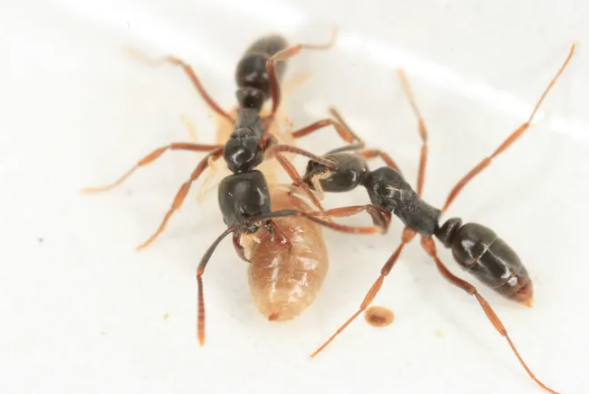
If you’ve ever stepped onto your yard on a warm Georgia afternoon and felt a sudden sharp sting before you even saw what caused it, you’re not alone, and it may not have been just a fire ant. Across Atlanta neighborhoods, a hidden invader is quietly establishing itself: the Asian Needle Ant. For homeowners, landscapers, and anyone who spends time outdoors, the invisibility of the threat is exactly what makes it worth paying attention to.
Asian Needle Ants are an invasive ant species first detected in Georgia in the 1930s, with early records dating back to Decatur in 1932. However, they were not extensively studied until roughly 20 years after their initial spread, meaning their expansion went largely unnoticed in the early years.
Today, they are established throughout Georgia and are now found across much of the East Coast.
Identification: What Do Asian Needle Ants Look Like?
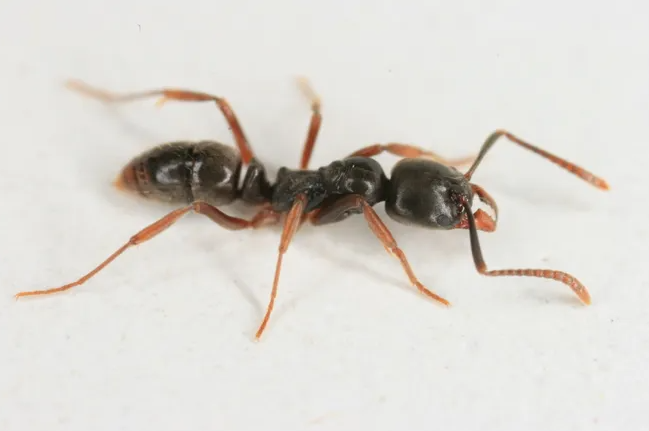
Asian Needle Ants are relatively small ants, measuring about 3/16 of an inch. They are typically:
- Brown to dark black in color
- Shiny-bodied
- Equipped with lighter-colored antennae and legs than fire ants
- Noticeable for having a longer stinger compared to many native ants
Where Do Asian Needle Ants Live?
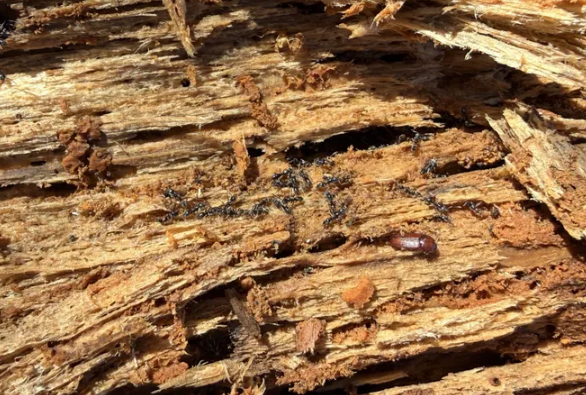
These ants prefer hidden, natural nesting environments, especially in residential areas where yards border wooded land.
Common nesting sites include:
- Leaf litter and decomposing organic material
- Dead logs and fallen branches
- Firewood piles and tree bark
- Under rocks, stones, and mulch
- Moist, shaded soil areas
- Landscapes dominated by large hardwood trees (especially big oak trees)
They are particularly common in backyards that back up to wooded areas.
Behavior: Why They Are Hard to Detect
Unlike fire ants, Asian Needle Ants are not highly visible in their movement patterns.
- Fire ants build mounds and establish clear foraging trails
- Asian Needle Ants avoid exposure and do not form obvious surface nests
This makes infestations harder to detect until a sting incident occurs.
Fire ant control products may still have some effectiveness, but targeted identification is critical for proper treatment.
Are Asian Needle Ants Dangerous?
Yes—Asian Needle Ants can pose a medical risk due to their sting.
Although they are typically not aggressive and will try to flee human contact, they will sting if:
- They are accidentally pressed against skin
- A nest is disturbed (common during yard work or landscaping)
- Hands are placed into mulch, debris, or hidden nesting areas
Health Risks
Their sting can cause:
- Pain and localized swelling
- Redness and irritation
- Hives or allergic reactions
- In severe cases, anaphylaxis
According to research from NC State University, they may be slightly more likely to trigger allergic reactions than honey bee stings in sensitive individuals.
Anyone with a known allergy risk should consider carrying an EpiPen when working outdoors.
Seasonal Activity and Spread
Asian Needle Ant activity peaks during the warmer months, particularly:
- Late spring through summer
- Highest populations often occur in July and August
During this time, outdoor exposure increases, which also raises the likelihood of accidental stings.
Their spread across the East Coast has been documented over decades, with significant expansion occurring between 1991 and 2017 for unknown reasons.
There is also speculation that they may have originally spread through the movement of plant materials, including root balls of trees.
Environmental Impact
Asian Needle Ants are more than just a nuisance—they are an ecological concern.
Key impacts include:
- Displacement of native ant species
- Reduction in biodiversity
- Disruption of seed dispersal systems
- Potential long-term changes to soil and plant ecosystems
Because ants play a critical role in moving seeds and aerating soil, their replacement by an invasive species can significantly alter local ecosystems.
Prevention Tips for Homeowners
Because these ants hide in natural debris, prevention is one of the most effective strategies.
Around Your Home:
- Remove leaf litter and yard debris regularly
- Keep mulch pulled back from home foundations
- Store firewood off the ground and away from the house
- Clear dead logs, bark, and decaying wood when possible
- Maintain landscaping to reduce moist, shaded hiding areas
When Working Outdoors:
- Wear thick gloves when handling mulch, soil, or debris
- Avoid placing hands into dark or hidden areas
- Be cautious around oak trees and wooded edges of property
These simple steps can significantly reduce the risk of accidental stings.
What to Do If You Suspect Asian Needle Ants
If you believe you’ve encountered Asian Needle Ants:
- Avoid disturbing the area further
- Take clear photos if safe to do so
- Contact the UGA extension office for confirmation
- Reach out to a professional pest control provider for treatment
Professional Asian Needle Ant Control
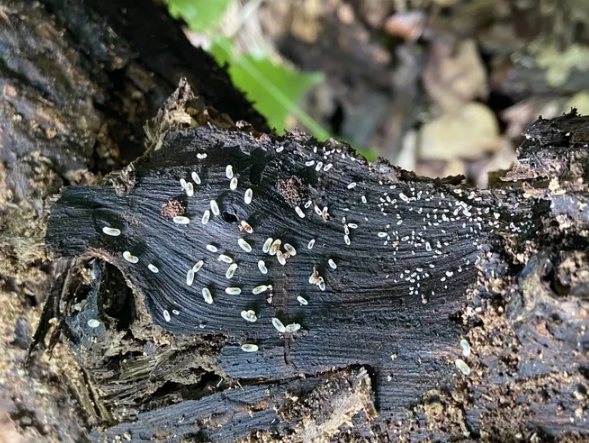
Because these ants are difficult to detect and treat effectively, professional intervention is often the most reliable solution.
The team at Peachtree Pest Control can help:
- Identify Asian Needle Ant infestations accurately
- Treat hidden nesting sites effectively
- Provide prevention strategies tailored to your property
- Reduce the risk of recurring activity
If Asian Needle Ants are confirmed on your property, contacting the Atlanta ant control professionals at Peachtree quickly can help limit exposure and long-term spread.
Protect Your Property from Asian Needle Ants with Peachtree Pest Control
Asian Needle Ants are an increasingly important pest concern in Georgia and across the East Coast. Their hidden nesting behavior, painful sting, and potential for allergic reactions make them a species homeowners should take seriously—especially during peak summer months.
Proper identification, careful yard maintenance, and professional pest control are the most effective ways to reduce risk and protect your home environment. Contact Peachtree today for your free estimate!